Allert Bijleveld is a scientist at the Royal Netherlands Institute for Sea Research (NIOZ). As a behavioural ecologist specializing in movement ecology, he studies how migratory shorebirds use coastal areas such as the Wadden Sea, with a particular focus on their interactions with food resources.
His work spans different scales, from fine-scale foraging decisions to large-scale migratory patterns. Ultimately, Bijleveld seeks to understand how shorebirds can adapt to rapidly changing environments. In his research, he integrates a range of techniques and disciplines and works on the development of advanced tracking technologies capable of monitoring even the smallest shorebirds at very fine spatial scales.
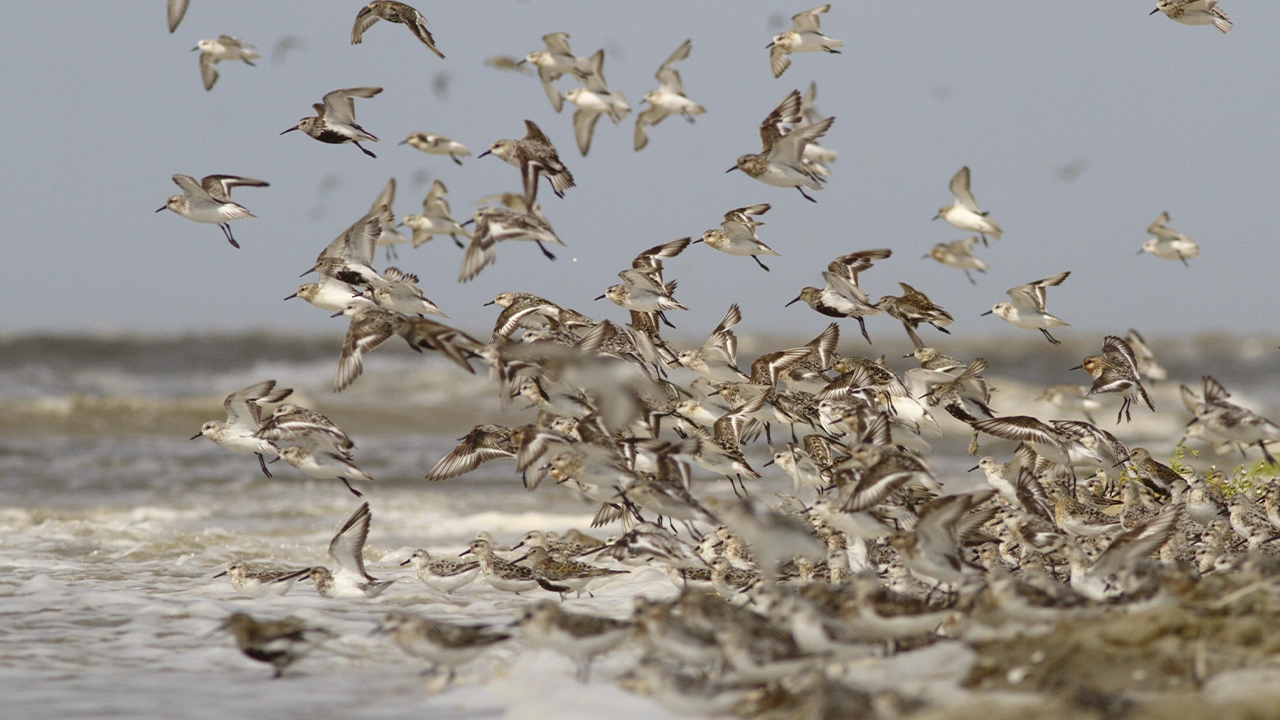
This presentation will take us to the Wadden Sea, one of Europe’s most important natural areas, where thousands of shorebirds live and rest during their long migrations. He will introduce WATLAS, a new high-tech system that makes it possible to track the movements of the smallest shorebirds as they move across the intertidal flats—something scientists have not previously been able to do with such precision.
Thanks to this technology, we can observe exactly which areas each bird species visits and how they use the landscape, giving us a deeper insight into their often hidden lives. The presentation will show how different shorebird species have their own preferred areas, even when they share the same general habitat. It will also explore what these birds feed on and where their food sources, such as worms, shellfish and shrimp, are hidden beneath the mud. During the talk, Bijleveld will show how their food preferences are directly linked to the places where they choose to spend their time.
This information helps us understand not only where the birds go, but also why they make these choices. Understanding these patterns allows us to make better-informed decisions about managing the Wadden Sea, both to protect nature and to ensure that it can continue to be enjoyed and used by people.